01 Multi-Layer Heterogeneous Aquifers
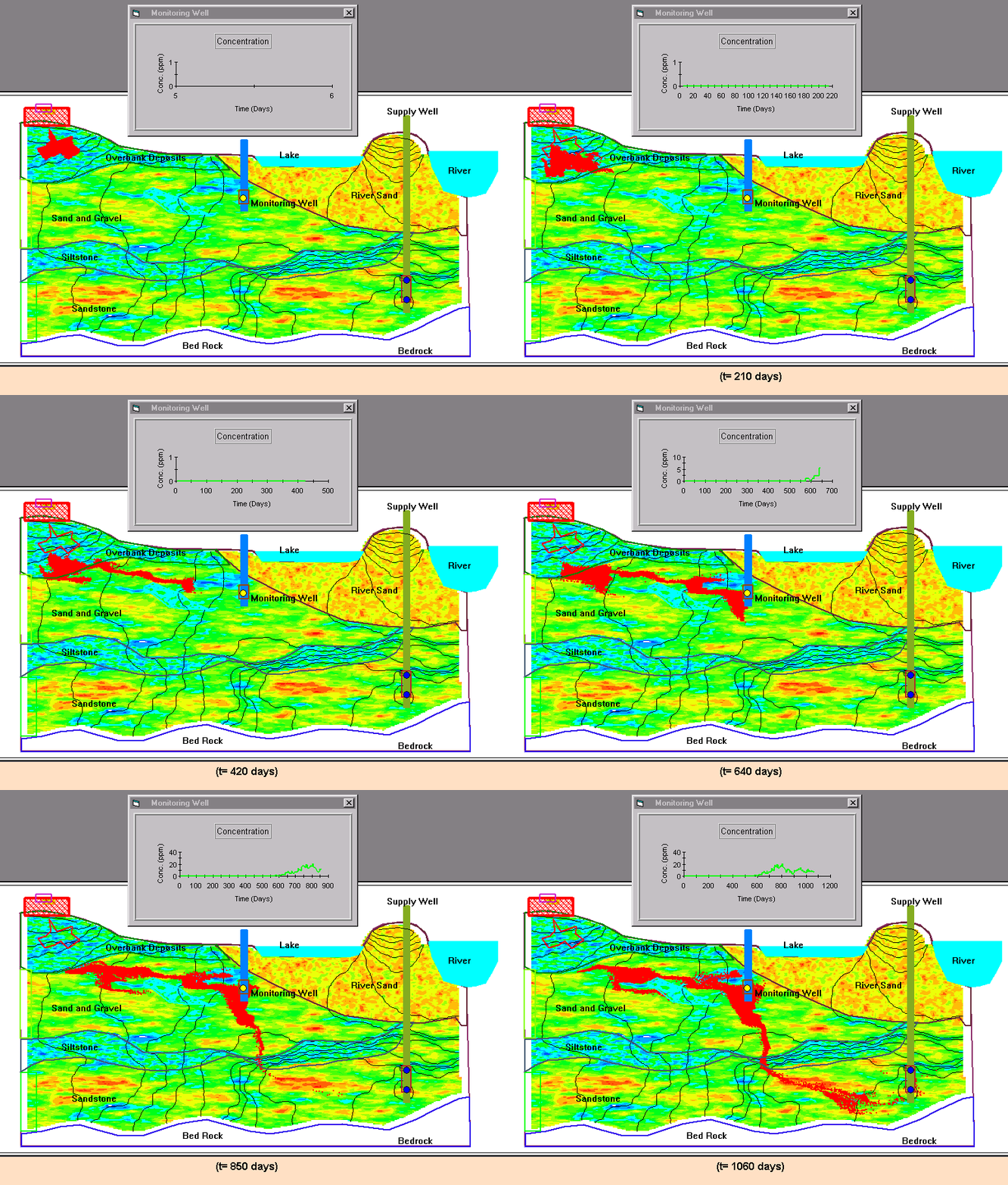
What does transport look like in a real aquifer — with large-scale structure and small-scale heterogeneity acting at once?
What you’re watching A realistic cross-section — overbank deposits, sand and gravel, siltstone, sandstone, and river sand over bedrock, with a lake, river, supply well, and monitoring well — where a plume released at the surface migrates through structural units that each also contain fine-scale heterogeneity.
The mechanism Real aquifers carry two kinds of heterogeneity together: systematic structural heterogeneity (the large zones and layers — the mappable geology) and small-scale heterogeneity (the variation within each unit). The plume’s path is set by their interaction — the structure routes it into the permeable units while the small-scale variability channels and disperses it within them. Both matter, and neither alone tells the whole story.
Why it matters It is the realistic picture behind every site investigation: predicting where contamination goes — and whether it reaches a supply well — requires honoring both the mappable structure and the unmappable fine detail.
IGW-NET Watching a plume thread through labeled geologic units that each carry their own fine heterogeneity shows the interaction of structural and small-scale variability in one view — the complexity a real model must capture.